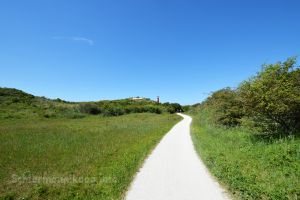
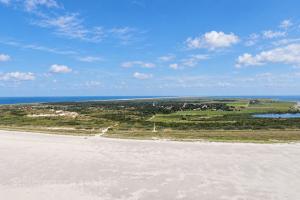
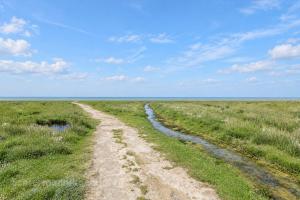
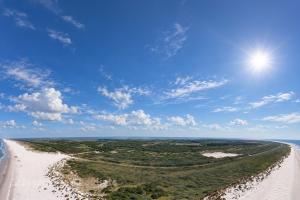
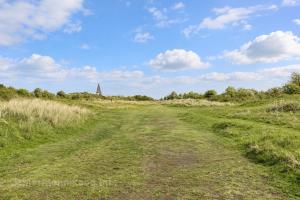
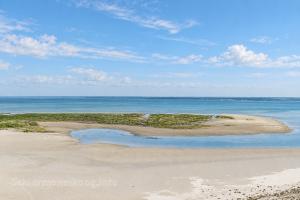
The cycling routes on Schiermonnikoog lead from the village through woods and dunes, past the Westerplas lake and on to the quiet eastern side of the island.
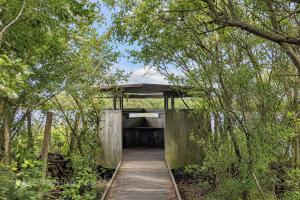
Birdwatching on the way: park your bike at the Westerplas bird hide, an open hide standing in the middle of the water.
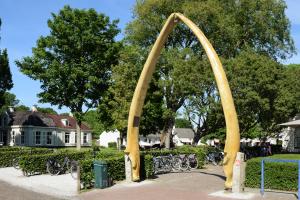
Through the village: at the Willemshof you cycle past the Walviskaken, the lower jaw of a blue whale.
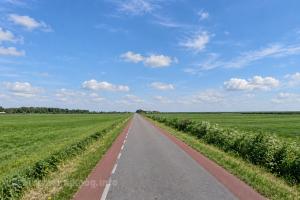
Along the polder: between the village and the ferry harbour you ride past the open Banckspolder, the island's only polder.
Heading east: the further you pedal, the quieter it gets; beyond the Kobbeduinen the vast Oosterkwelder salt marsh begins.
9 Nature reserves
By bike you can reach 9 nature reserves on Schiermonnikoog, nearly all of them inside the national park.
Westerduinen: shifting dunes, damp valleys and birch woods west of the Badweg.
Oosterduinen: dune tops and open grassland just east of the village.
Het Rif: a sandbank with salt marsh on the south-western tip, a resting place for thousands of birds.
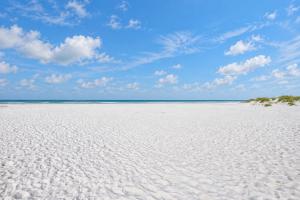
De Balg: the far eastern tip, a quiet sandy plain with low dunes.
Schiermonnikoog National Park
Schiermonnikoog National Park covers some 5,400 hectares of the island of Schiermonnikoog. It has been a national park since 1989 and part of the Wadden Sea World Heritage Site since 2009. What can you expect at the National Park? - Landscape: Dunes, salt marshes, beach, woods, polders and mudflats alternate. On the ...
The Banckspolder is the only polder on Schiermonnikoog. This open farmland lies between the village and the ferry harbour, on the Wadden Sea side. What can you expect at the Banckspolder? - A piece of history: The polder is named after John Eric Banck, who bought the island in 1858. Around 1860 he had a dyke built to ...
The Westerduinen are the dune area on the west side of Schiermonnikoog, west of the Badweg. Here high drifting dunes, wet dune valleys and birch woodland alternate. What can you expect at the Westerduinen? - Varied landscape: You will find large stretches of damp birch woodland and lime-rich dune valleys. - Sand martins: ...
The Oosterkwelder is a large salt marsh on the Wadden side of Schiermonnikoog, east of the Banckspolder. Natuurmonumenten calls it the wildest salt marsh in the Netherlands. What can you expect at the Oosterkwelder? - A growing landscape: Every high tide leaves silt behind, so the salt marsh keeps growing. Most of it ...
The Oosterduinen are part of the large dune area of Schiermonnikoog, east of the village. A varied landscape of dune tops, open grassland and wet dune valleys. What can you expect at the Oosterduinen? - Wet dune valleys: The southern part has lime-rich, damp dune valleys. - Special plants: Orchids grow in the island's ...
De Balg is the far eastern tip of Schiermonnikoog: a vast sand plain with low dunes. It is one of the youngest nature areas in the Netherlands and one of the quietest and darkest places in the country. What can you expect at De Balg? - An island on the move: Schiermonnikoog keeps shifting eastwards. In 1980 the eastern ...
The Kobbeduinen are a tongue of dunes reaching from the main dune area into the Oosterkwelder, east of the village on Schiermonnikoog. From the top you look out over the wildest salt marsh in the Netherlands. What can you expect at the Kobbeduinen? - Young dunes: The Kobbeduinen formed around 1875. They sheltered the salt ...
Het Rif is a large sand flat with salt marsh on the southwest tip of Schiermonnikoog, between the Westerplas and the Westerstrand. A wide, open landscape where thousands of birds rest. What can you expect at Het Rif? - A young salt marsh: Over recent decades Het Rif has grown into a large salt marsh. - Resting place for ...