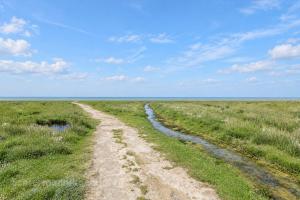
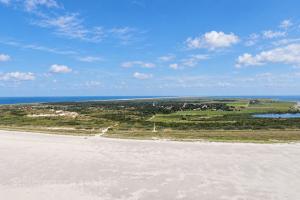
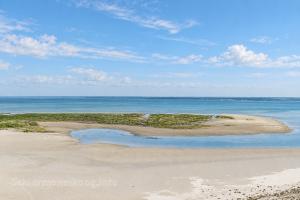
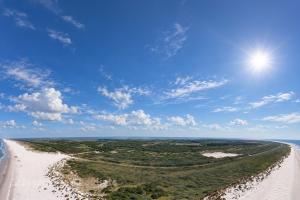
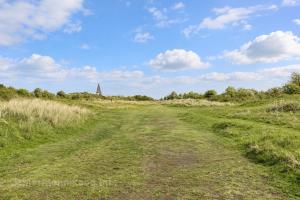
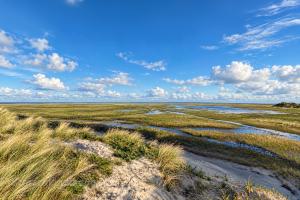
The wildest salt marsh in the Netherlands: that is what Natuurmonumenten calls the Oosterkwelder on the Wadden side of the island.
For every level: from a short night walk to a hike of over 20 km, see the walking routes.
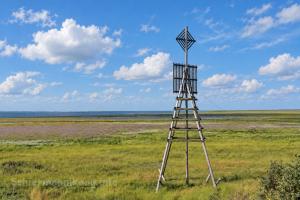
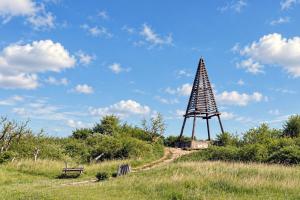
Views from the beacons: wooden beacons on the dune tops and the red Noordertoren are among the finest viewpoints.
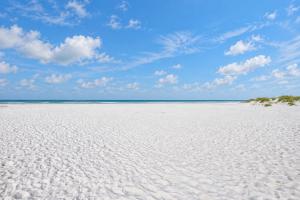
Along the tideline: the wide beach on the north side is ideal for a long beach walk.
Across the seabed: with a guide you can also go mudflat hiking at low tide.
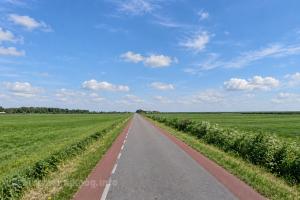
Prefer to cycle? Then take a look at our cycle routes on Schiermonnikoog.
8 Walking routes
The walking routes on Schiermonnikoog pass the Westerplas, lead through dunes and woodland and follow the beach to the quiet eastern side of the island.
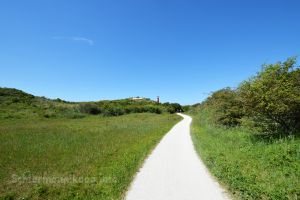
Dunes and beach: the route through National Park Schiermonnikoog is 15.1 km long and runs mainly on natural paths.
Winter walk: 10 km through dunes, beach and woodland, more than half of it on unpaved nature trails.
November Wandelmaand route: a varied route of 8.9 km.
WaddenWandelen: stages 16 and 17 run from the ferry to the De Marlijn bus stop and back (each just over 14 km), while the 8.8 km variant heads to the Kaap Willemsduin.
Night walk: a short 2.5 km route, ideal for experiencing the darkness of the island.
Trail run: a 20.7 km route that you can also simply walk at your own pace.
9 Nature reserves
Around the village lie 9 nature reserves, almost all part of the national park.
De Balg: the far eastern tip, a vast sand plain with low dunes and one of the quietest and darkest places in the Netherlands.
Westerduinen: high drifting dunes, damp dune valleys and birch woodland west of the Badweg.
Het Rif: a large sandbank with salt marsh on the south-western tip, where thousands of birds rest.
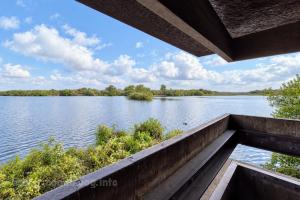
Westerplas: the largest freshwater lake on the island and one of the best birdwatching spots.
Oosterduinen: dune tops, open grassland and damp dune valleys east of the village.
Schiermonnikoog National Park
Schiermonnikoog National Park covers some 5,400 hectares of the island of Schiermonnikoog. It has been a national park since 1989 and part of the Wadden Sea World Heritage Site since 2009. What can you expect at the National Park? - Landscape: Dunes, salt marshes, beach, woods, polders and mudflats alternate. On the ...
The Oosterkwelder is a large salt marsh on the Wadden side of Schiermonnikoog, east of the Banckspolder. Natuurmonumenten calls it the wildest salt marsh in the Netherlands. What can you expect at the Oosterkwelder? - A growing landscape: Every high tide leaves silt behind, so the salt marsh keeps growing. Most of it ...
De Balg is the far eastern tip of Schiermonnikoog: a vast sand plain with low dunes. It is one of the youngest nature areas in the Netherlands and one of the quietest and darkest places in the country. What can you expect at De Balg? - An island on the move: Schiermonnikoog keeps shifting eastwards. In 1980 the eastern ...
The Banckspolder is the only polder on Schiermonnikoog. This open farmland lies between the village and the ferry harbour, on the Wadden Sea side. What can you expect at the Banckspolder? - A piece of history: The polder is named after John Eric Banck, who bought the island in 1858. Around 1860 he had a dyke built to ...
The Oosterduinen are part of the large dune area of Schiermonnikoog, east of the village. A varied landscape of dune tops, open grassland and wet dune valleys. What can you expect at the Oosterduinen? - Wet dune valleys: The southern part has lime-rich, damp dune valleys. - Special plants: Orchids grow in the island's ...
The Westerduinen are the dune area on the west side of Schiermonnikoog, west of the Badweg. Here high drifting dunes, wet dune valleys and birch woodland alternate. What can you expect at the Westerduinen? - Varied landscape: You will find large stretches of damp birch woodland and lime-rich dune valleys. - Sand martins: ...
The Kobbeduinen are a tongue of dunes reaching from the main dune area into the Oosterkwelder, east of the village on Schiermonnikoog. From the top you look out over the wildest salt marsh in the Netherlands. What can you expect at the Kobbeduinen? - Young dunes: The Kobbeduinen formed around 1875. They sheltered the salt ...
Het Rif is a large sand flat with salt marsh on the southwest tip of Schiermonnikoog, between the Westerplas and the Westerstrand. A wide, open landscape where thousands of birds rest. What can you expect at Het Rif? - A young salt marsh: Over recent decades Het Rif has grown into a large salt marsh. - Resting place for ...
Westerduinenpad: a high dune with views over the dunes, the woods and the village.
Noordertoren: the red lighthouse is the symbol of Schiermonnikoog and a landmark on every walk.
Waterstaatpad
The Waterstaatpad viewpoint is a dune top at the eastern end of the Waterstaatpad on Schiermonnikoog. From here you look out over the eastern part of the island, where nature is largely left to its own devices. What can you expect at the Waterstaatpad viewpoint? - A quiet walk: The Waterstaatpad is a wide footpath of ...
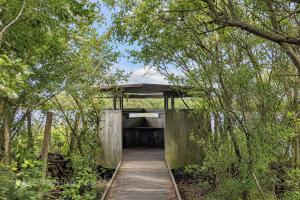
The Westerplas bird hide stands in the middle of the water of the Westerplas, south-west of the village on Schiermonnikoog. The hide is very open, so birds come right up underneath it and you see them up close. What can you expect at the Westerplas bird hide? - History: The hide opened in 2008. It came about thanks to the ...
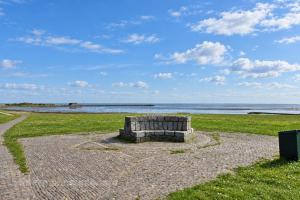
The bench on the Minne Onnespad stands on the dike near the Reeweg on Schiermonnikoog. It is not worth a special trip, but if you walk or cycle past, it is a lovely place to stop and enjoy the view. What can you expect at the bench on the Minne Onnespad? - The bench: The bench is made of masonry granite blocks. You can ...
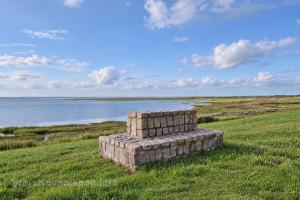
The Bank van Banck is a stone bench on the sea dike of Schiermonnikoog. It is not worth a special trip, but if you walk or cycle past, it makes a lovely place to stop. The bench honours John Eric Banck, who bought the island in 1858 and in 1860 had the dike built that protects the village. What can you expect at the Bank ...
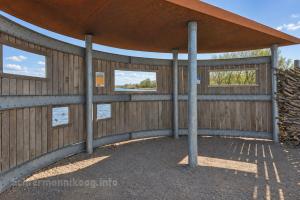
The Westerplas bird screen stands in the north-west corner of the Westerplas on Schiermonnikoog. Natuurmonumenten put up the screen so that you can watch the spoonbill colony well without disturbing it. It is a different spot from the Westerplas bird hide. What can you expect at the Westerplas bird screen? - Birds: From ...
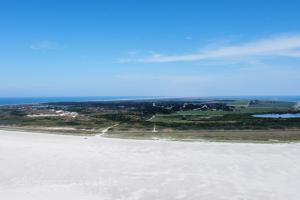
The Westerduinenpad viewpoint is on a high dune in the Westerduinen of Schiermonnikoog. From the top you have a lovely view over the dunes, woods and village. What can you expect at the Westerduinenpad viewpoint? - Wide views: You look out over the rolling dune landscape of the Westerduinen and the area around the ...
Kaap Willemsduin stands in the east of Schiermonnikoog, in one of the most unspoilt parts of the National Park. This wooden beacon is a landmark in a quiet and vast dune landscape. What can you expect at Kaap Willemsduin? - A historic beacon: The beacon was built as a landmark for sailors and as a survey point for ...
Kaap Kobbeduinen is a wooden beacon in the dunes on the eastern side of Schiermonnikoog. From this viewpoint you overlook one of the most remote and unspoilt parts of the National Park. What can you expect at Kaap Kobbeduinen? - A historic beacon: The beacon was built as a landmark for sailors and as a survey point for ...