Eilauners, the island's own language
Schiermonnikoogs, which the islanders themselves call Eilauners, is a Frisian language that differs strongly from the Frisian spoken on the mainland.
- Frisian, but different: Eilauners belongs to West Frisian, but it differs so much that Frisians from the mainland often find it hard to understand.
- About a hundred speakers: most estimates put the number of islanders who still speak it at around a hundred. The number has fallen sharply since the Second World War, as many new residents came from the mainland.
- Its own features: where Frisian has sk-, Schiermonnikoog says sch-. There are no diminutives: the small front houses here are called lytje hus.
- Keeping it alive: courses in Schiermonnikoogs have been given on the island since the 1960s, and there is a grammar, a word list and two dictionaries.
The poets of the Taalroute
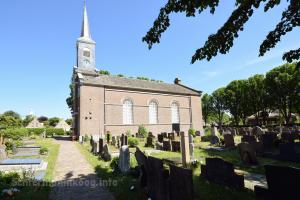
The poems on the route were written by three islanders, all three born and buried on Schiermonnikoog.
- Lammert Wiersma (1881 to 1980): as a young man he attended the nautical college, later joined the pilotage service and rose to become its director. From 1950 he wrote poetry in Eilauners, and in 1969 he returned to the island. Seven of the nine poems on the route are his.
- Jacob Fenenga (1888 to 1972): the seaman Fenenga became a captain in 1917. During the Second World War his tanker was torpedoed, and he received the Dutch War Commemorative Cross for rescuing the crews. After the war he returned to the island.
- Pita Grilk (1905 to 1980): she studied at the conservatory with her sister and became an organist in Grou. Her poem Nietig evokes the atmosphere of the beach and the smallness of people within it.
- A tribute to Banck: Wiersma's poem Mr. J.E. Banck, on the Reeweg, honours John Eric Banck, the owner of the island who created the Banckspolder, the fertile polder the islanders are proud of.