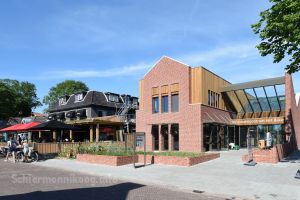
Almost the entire island of Schiermonnikoog has been a protected National Park since 1989, with beach, dunes, forest, salt marsh, polder and mudflats all within walking and cycling distance of each other.
In short: the park covers some 5,400 hectares and includes everything except the village, the area directly north of it and the Banckspolder.
Eight landscapes: from the wide beach and drifting dunes to the Oosterkwelder salt marsh and the mudflats, each with its own plants and animals.
Bird island: more than 300 bird species have been recorded here, and you will regularly see seals as well.
The first national park: on 19 July 1989 Schiermonnikoog became the first national park in the Netherlands in the modern sense; since 2009 the Wadden Sea has also been a UNESCO World Heritage Site.
Mind the breeding season: from 15 April to 15 July parts of the park are closed to give breeding birds some peace.
Take a good look around and you will soon see that Schiermonnikoog is above all varied and natural, with eight landscape types that each have their own plants and animals.
Beach: on the wide beach you can watch the first little dunes form on the bare sand and slowly grow into larger, vegetated dunes.
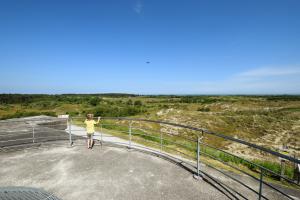
Dunes: between the bare, drifting dune slacks and the vegetated dunes, colourful and fragrant dune plants bloom everywhere; from the Wassermann bunker, 20 metres above sea level, you overlook the whole dune area.
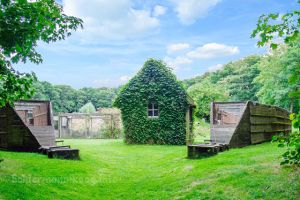
Forest: in the pine forest, planted in the late 19th century by Count Von Bernstorff, you smell the pines and in autumn mushrooms pop up; the Kooibos woods are home to the historic De Kooiplaats duck decoy.
Salt marsh: on the vast Oosterkwelder, which partly floods at high tide, gulls, spoonbills and other birds nest among the samphire and sea lavender in spring.
Polder: in the flat Banckspolder you will see meadow birds in summer and thousands of geese in winter.
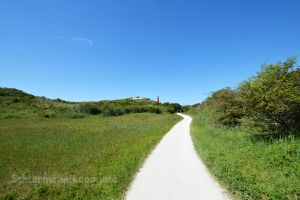
Westerplas: close to the village you can walk along the green dike or cycle the shell path past the Westerplas, a freshwater lake where many waterbirds rest.
Mudflats: on the mudflats of the Wadden Sea birds gather their meals from the huge supply of shellfish and worms in the seabed; explore them safely on a guided mudflat walk.
Village: the green village is part of the landscape too, and from the western beach you can watch the sun sink beautifully into the sea.
Flora and fauna
Because all buildings are on the western part of the island, roads and paths are often the only signs of human activity beyond it.
With all your senses: look at the flowers in the dunes, feel the wind on the beach, listen to the birds on the salt marsh, taste the salty samphire and smell the mud on the flats.
Rich plant life: half of all plants and flowers in the Dutch flora can be found on the Wadden island of Schiermonnikoog, more than 500 species in total.
Berries for the birds: hawthorn, sea buckthorn, elder, blackberry and wild rose lay a rich table in autumn and winter.
Salt specialists: on the salt marsh grow plants that can cope with salt water, such as samphire and sea lavender, which turns the green purple in summer.
Birds
Thanks to the enormous food supply, the Wadden Islands are a popular resting and breeding place for countless bird species.
On the mudflats: curlews, oystercatchers and magpies search for food on the exposed flats at low tide.
Geese in winter: in autumn, winter and early spring thousands of geese spend the winter on the island, including brent geese and barnacle geese.
Meadow birds: in summer you will hear and see the black-tailed godwit, the redshank and the lapwing in the polder.
Ducks: ducks are often found on the mudflats, and in spring in the dunes as well.
Birds of prey: birds of prey regularly hover above the island, and you will often see harriers hunting low over the dunes and salt marsh.
Mammals and marine life
Unlike the many birds, only a few mammal species live on Schiermonnikoog.
Rabbits and hares: they live here in large numbers and keep the dune vegetation short.
Seals: the seal is the largest mammal you may encounter, often resting on sandbanks such as the Balg.
On the beach: seaweed, crabs and shells from the creatures living in the sea mainly wash up on the beach.
Life in the mudflats: the seabed is full of worms, cockles and shrimps; do not head out on your own, but explore it safely on a guided mudflat excursion.
The National Park in figures
Small but diverse: this is Schiermonnikoog National Park in numbers.
Area:
±54 km² (±5,400 hectares)
Length:
±18 km
Width:
±3.5 km
Tidal range:
2 to 3 metres
Bird species:
More than 300
Plant species:
More than 500
National Park since:
1989
UNESCO World Heritage since:
2009
Visitors:
±275,000 per year
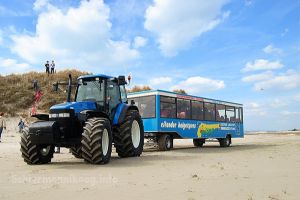
Eilander Balgexpres
This special beach ride takes you to the most eastern point of the island, where nature is still untouched and wild. What can you expect from the Eilander Balgexpres? - Unique Beach Experience: Brave the elements on the beach of Schiermonnikoog and embark on an adventure like no other. - The Eilander Balg: ...
For most of the year the park is freely accessible, but during the breeding season (from 15 April to 15 July) a few exceptions apply to give the birds some peace.
Eastern dunes and salt marsh: the area east of the Prins Bernhardweg and north and east of the Kooiweg is closed; this is signposted.
Up to the Kobbeduinen: the nature area between the Prins Bernhardweg and the Kobbeduinen is only accessible via the roads and paths marked with white posts.
Westerplas: the immediate surroundings of the Westerplas are closed to the public.
Eastern beach: from beach post 10 to the eastern tip you may only walk right along the waterline; the rest of the eastern nature area is closed.
Oosterkwelder: the Oosterkwelder is only accessible on excursions led by a guide from Natuurmonumenten.
Outside the breeding season too: birds are sensitive to disturbance, especially at high-tide roosts (sandbanks that stay dry at high tide) such as the Rif and while feeding on the mudflats.
Watch with respect: keep your distance, keep your dog on a lead and watch birds and seals with their young through binoculars.
The park is best explored by bike or on foot, and with a guide you can also reach places you are not allowed or able to visit on your own.
Het Baken: start at the Het Baken information centre in the village, the National Park visitor centre, for maps, exhibitions and the excursion programme.
Walking: follow one of the marked walking routes through the dunes and forest and along the salt marsh.
Cycling: on this car-free island you bring your own bike or rent one, and the cycle paths take you deep into the park.
Views: climb the Wassermann bunker for a panorama over dunes, beach and mudflats.





 Display on Map